Welcome to this article, where I will introduce you to the incredible benefits of learning piano for the brain. Playing the piano can improve our memory, concentration, and even our intelligence.
I am always fascinated by how music can contribute to our personal growth. That is why I am delighted to share with you the positive effects of learning piano on how our brains function.
In the following sections, I will explore in detail the different ways in which the piano can stimulate our brains. We will see how regular piano practice can strengthen our memory, improve our concentration, and even increase our intelligence.
I am sure you will be surprised by the benefits that learning piano can offer. Ready to discover how music can improve your life? Then let’s begin!
Learning piano and its effects on memory
The piano is a fascinating instrument that offers many benefits for the brain. Besides being an excellent means of artistic expression, learning to play the piano can improve memory.
Studies have shown that regular piano practice can stimulate the brain and improve its ability to store and retrieve information. Playing music activates different areas of the brain, leading to increased brain plasticity.
This means that the brain becomes more efficient at processing and retaining information, which can help improve both short- and long-term memory. In addition, regular piano practice may help prevent age-related memory disorders such as Alzheimer’s disease.
By learning new pieces or improvising, we can continually stimulate the brain with new challenges and improve its memory capabilities. Playing the piano is therefore an excellent way to keep the brain fit while creating music.
In short, learning to play the piano is an excellent way to improve memory and exercise the brain in an enjoyable manner. Making music helps keep the mind active and preserve cognitive health at any age.
Improved concentration through learning piano
Now let’s discuss how learning piano can improve concentration. As a pianist myself, I can attest to the piano’s ability to stimulate the brain and improve concentration.
Regular piano practice requires sustained attention, the effective management of several tasks at once, and fine finger coordination. All of this demands a high level of concentration that, over time, can be applied to other areas of life.
Moreover, studies have shown that playing the piano can strengthen the neural circuits responsible for concentration and attention. According to a Stanford University study, piano practice can improve “the neural mechanisms responsible for planning, executing, and organizing hand movements.”
Ultimately, playing the piano is an excellent way to stimulate the brain and improve concentration. Add this to the many other benefits of learning piano, and you have plenty of reasons to start playing right now!
Intelligence stimulated by the piano
I am convinced that learning piano can have a significant impact on intelligence. Several studies have shown that musical training, particularly piano training, can stimulate certain areas of the brain associated with cognitive functions.
For example, playing the piano can improve problem-solving ability, pattern recognition, and spatial-temporal skills. According to a study conducted by the Neurological Research Institute in Los Angeles, children who received three years of music instruction achieved better results on verbal and nonverbal intelligence tests than children who received no music instruction.
| Cognitive skills associated with learning piano: | How learning piano stimulates intelligence: |
|---|---|
| Problem-solving | Learning piano develops the ability to solve complex musical problems as well as more general problems. |
| Pattern recognition | Recognizing recurring patterns is necessary when playing the piano, so this skill extends to other cognitive areas. |
| Spatial-temporal skills | The piano requires an understanding of space within the temporal context of music, improving the perception and performance of spatial-temporal tasks in other areas. |
In conclusion, learning piano can have a positive impact on intelligence by stimulating several important cognitive functions. If you want to improve your intelligence while cultivating a passion for music, learning piano could be an excellent way to achieve these goals.
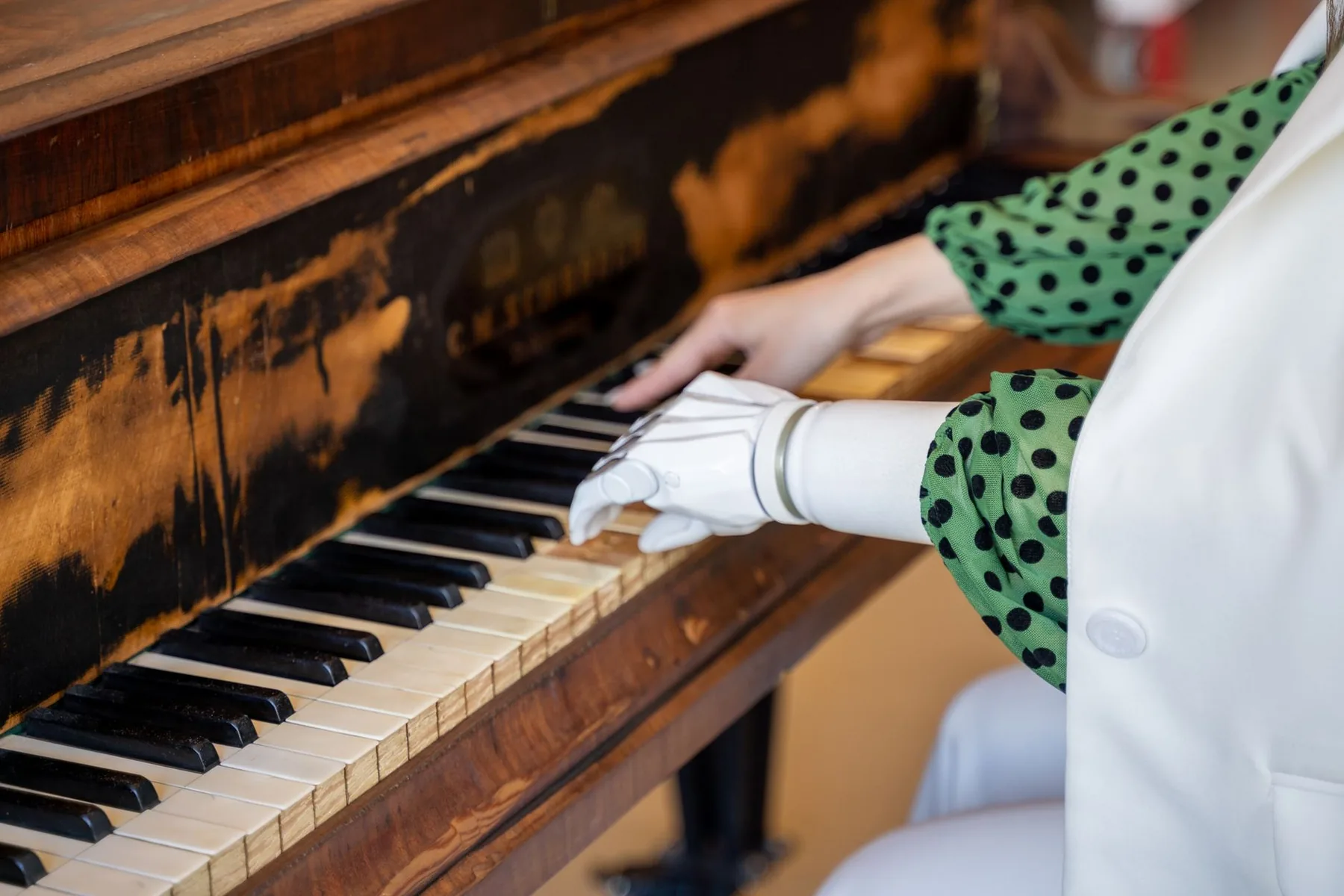
Musical training and brain neuroplasticity
Neuroplasticity is the brain’s ability to change and adapt to its environment throughout our lives. This property is essential for learning new skills, as well as for recovering from an injury or illness.
Learning piano is an excellent way to stimulate the brain’s neuroplasticity. Studies have shown that regularly practicing a musical instrument can create new neural connections and strengthen existing ones. The more you play the piano, the more your brain develops specific areas that allow you to play more fluently and perform increasingly complex music.
The key to stimulating neuroplasticity while learning piano is regular practice. Short but frequent practice sessions are more beneficial than long but irregular ones. Regular practice helps maintain brain plasticity and strengthen the neural connections that are essential for playing the piano.
In short, learning piano is an excellent way to stimulate the brain’s neuroplasticity and develop new cognitive skills. Regular piano practice can help strengthen neural connections and improve overall brain function, thereby contributing to personal growth.
The emotional benefits of learning piano
Learning piano can also offer considerable emotional benefits. When I play music, I find a form of personal expression that allows me to express complex emotions that interfere with my daily life, while helping me understand and accept them. Music can give me a sense of freedom and creativity and help me escape from the real world for a while.
Regular music practice can also help regulate mood and reduce stress. When I play the piano, I have noticed that I feel calmer and more centered. Repeating my favorite pieces can induce a meditative state, allowing me to relax and focus on the present moment.

Ultimately, learning piano can offer a form of personal growth that cannot be achieved otherwise. By exploring different compositions and musical styles, I can broaden my horizons and discover new interests and passions that allow me to understand myself better and grow as a person.
The connection between learning piano and discipline
For me, learning piano has always been a matter of discipline and perseverance. You must be able to sit down at the piano regularly and work hard to improve your skills.
That is why I learned to set clear goals and organize myself effectively to make the most of my practice time. This has enabled me to stay motivated and continue making progress, even when I have encountered difficulties.
I believe this discipline applies to every aspect of life, not just learning music. Learning piano can help develop skills such as time management, setting clear goals, and the ability to work hard to achieve them.
I have no doubt that many professional musicians acquired these skills through their musical training. Ultimately, I believe that learning piano is an excellent way to strengthen personal discipline and cultivate a strong work ethic.
Conclusion
In summary, learning piano can benefit the brain in several ways. It can not only improve memory, concentration, and intelligence, but also contribute to emotional well-being and the development of personal discipline.
Music has the power to stimulate the brain and encourage the development of new neural connections, which can improve overall neuroplasticity. This means that even if you begin learning piano later in life, you can still gain significant benefits for your mental health and well-being.
Moreover, learning piano can be a source of personal satisfaction and enjoyment, offering a form of artistic expression and creativity. It can also be an excellent way to relax and relieve stress at the end of the day.
Consider learning piano
Ultimately, I strongly recommend considering learning piano. You do not need to be a musical genius or start at a young age to gain significant benefits. All you need is a piano, a little time, and perseverance. The benefits for your brain and emotional well-being are well worth the effort required to master this magnificent instrument.



0 Comments