Before making any purchase, assess your needs and budget. This step helps prevent mistakes and refocuses the project on its intended use.
A durable, high-quality instrument supports motivation, whether you are a beginner or an advanced player. Technical reliability and the brand affect longevity.
Your selection should take size, portability, sounds and built-in technology into account. These criteria make it easier to compare models and ranges.
Investing in a reliable instrument helps you avoid being misled by design and ensures steady musical progress. Also consider headphones so you can practice without disturbing anyone.
This buying guide aims to narrow down the choice among hundreds of available pianos. You will find advice about price, ability level and the model suited to your experience.
Professional digital piano: how to choose the right one
Ask yourself where it will be used: on stage, in the studio or in the living room—this will guide the entire decision.
An electronic instrument reproduces the feel and sound of an acoustic piano. It uses samples or synthesis to provide a realistic result.
Every model has its own technical characteristics. Examine its internal components, build quality and durability, particularly if the instrument will travel or remain in a studio.
Requirements differ depending on the intended use: stage instruments prioritize portability and reliability, whereas home models favor sound reproduction and comfort.
Before buying, test the keyboard’s responsiveness and the depth of its sounds. Trying several models will help you choose a digital piano that meets your expectations. This small effort reduces the risk of making the wrong choice.
Understanding the difference between acoustic and digital
Understanding how sound is produced helps explain what distinguishes these two instrument families.
How struck strings work
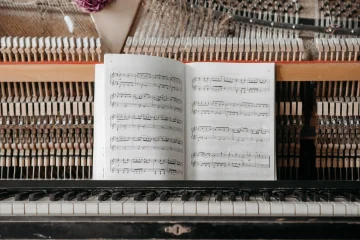
In an acoustic piano, each key operates a felt hammer that strikes one or more strings. The vibration creates natural resonance and rich harmonics.
Upright pianos have vertically arranged strings, whereas grand pianos have a horizontal arrangement that promotes greater projection and resonance. Some grand pianos exceed 3 meters in length and produce exceptionally deep bass.
The sampling revolution
Sampling captures recordings of major concert instruments to reproduce their sounds. Engineers layer several dynamic levels to achieve a faithful result.
Electronic instruments incorporate this system into the cabinet and simulate the sympathetic resonance of strings. A well-designed digital piano can therefore offer varied sounds while retaining an experience close to that of an acoustic piano.
The vital importance of the keyboard and touch
The keyboard’s feel often determines how enjoyable the instrument is and how long it will be used.
A high-quality keyboard responds faithfully to the musician’s intentions. To make progress, choose a model with dimensions close to those of an acoustic piano.
H3: The standard number of keys
The standard number of keys
The standard configuration has 88 keys: 52 white and 36 black. This range lets you play the entire repertoire and learn positions without compromise.
A heavy action, often called piano action, simulates hammer resistance and provides more natural dynamics.
“A good keyboard turns daily practice into lasting enjoyment.”
- 88 keys for a complete range and serious learning.
- Progressive hammer systems reproduce the varying weight between the bass and treble registers.
- Weighted keys help develop finger strength and precision.
| Criterion | Benefit | Effect on playing |
|---|---|---|
| Number of keys | 88 (52 white / 36 black) | Full access to the notes used throughout the repertoire |
| Action | Weighted / progressive | Greater expressiveness and better dynamic control |
| Keyboard quality | Sturdy construction | Long-term satisfaction and durability |
Key sensitivity for complete expressiveness
Key sensitivity lets you vary the sound intensity according to how firmly you strike. The instrument can therefore reproduce dynamics close to those of an acoustic piano.
A responsive keyboard immediately provides a sense of control. Piano action, with its simulated hammers, creates helpful resistance for controlling the sound.
Without sensitivity, playing becomes flat and monotonous. Good sensitivity is essential for expressive solos and for accompanying singers with subtlety.
- Adjustment: an adjustable sensitivity curve adapts to your style.
- Consistency: a high-quality internal mechanism ensures an even response.
- Dynamics: transitions from pianissimo to fortissimo should remain smooth.
| Criterion | Effect | Suitable level |
|---|---|---|
| Sensitivity | Control of nuances | Beginner to advanced |
| Action (hammer) | Realistic resistance | Intermediate to professional |
| Settings | Adaptation to playing style | All levels |
“Mastering key sensitivity is a crucial step toward achieving a high level of performance.”
Analyzing the built-in technology
Built-in features transform a simple instrument into a versatile creative tool.
A good system provides useful options for learning, stage performance and studio work.
The role of the metronome
A built-in metronome remains essential for working on rhythm. It takes up no extra space and is easy to adjust.
Its purpose: to improve consistency and give practice sessions structure.
Polyphony and its limits
Polyphony defines how many notes can be played simultaneously.
Aim for at least 64 voices to prevent notes from cutting out when using the sustain pedal or playing complex arrangements.
Spatial effects
Reverb and other effects simulate concert halls or studio environments.
They enrich the sounds and add depth without external equipment.
- Varied sound banks: electric pianos, organs and strings.
- Transpose: changes pitch without changing finger positions.
- High-quality speakers and headphone connectivity for silent practice.
- Multitrack recording functions for composition and studio work.
“High polyphony and quality effects ensure faithful reproduction of complex pieces.”
| Feature | Benefit | Recommendation |
|---|---|---|
| Polyphony | Play multiple notes without cutoffs | At least 64 voices, ideally 128 or more |
| Metronome | Improves sense of tempo | Built-in and adjustable |
| Effects (reverb) | Realistic spatial sound | Multiple ambience settings |
| Recording | Composition and review | Multitrack or MIDI |
To learn more about particular models and series, read this practical article: Yamaha guide and comparison.
Choosing according to your musician profile
A student’s needs are not the same as those of a touring musician.
Home use: for a household, a cabinet model provides a refined appearance and an integrated pedalboard. This format supports comfortable, stable practice.
Traveling musician: choose a portable, lightweight and robust model. It will be easier to transport to rehearsals and concerts.
Your level affects the price and range you should target. A good instrument should provide a consistent playing experience so that you can progress without frustration.
- Consider the available space: a cabinet model takes up more room than a portable keyboard.
- A sustain pedal remains essential for enriching expression.
- Choose a versatile model if you play styles ranging from classical to jazz.
“A purchase suited to your level encourages regular, motivating learning.”
The benefits of digital pianos in the studio
In the studio, a well-integrated keyboard speeds up production and frees creativity.
DAW integration
A digital piano often serves as a MIDI controller. It controls virtual instruments and sound libraries without loss.
Varied sounds enrich tracks and facilitate the creation of professional textures. Direct recording makes it easy to capture ideas in a single take.
- Built-in effects: ready-to-use reverb and processing for shaping the sound before mixing.
- Minimal latency: smooth playing during real-time recording.
- Versatility: switch from a classical piano sound to electronic textures in seconds.
“A connected instrument reduces the back-and-forth between hardware and software.”
For an in-depth comparison of instrument families, read this acoustic vs. digital comparison or this guide to choosing a first instrument.
A closer look at hybrid and silent pianos
Hybrid models combine traditional mechanics with modern electronics to provide an experience very close to that of an acoustic piano.
What changes? A hybrid uses a real action, often without hammers, and a system of sensors. The feel and resistance of the keys remain faithful to those of an acoustic piano.
The silent system prevents the hammers from striking the strings. It lets you play through headphones without disturbing the neighbors.
- Benefit: switch instantly between acoustic and digital modes.
- Maintenance: like any acoustic piano, these instruments require regular adjustments.
- Performance: a hybrid grand reproduces the richness of a genuine grand piano’s sound.
“The playing experience on a hybrid often rivals that of an acoustic piano.”
| Type | Strength | Recommended use |
|---|---|---|
| Hybrid (e.g. AvantGrand) | Authentic action, digital conversion | Studios, demanding musicians |
| Built-in silent system | Headphone practice, apartment living | Home practice, rehearsals |
| Silent-system installation | Conversion of an acoustic piano | Upgrade potential without replacing the instrument |
The essential brands on today’s market
Certain brands set the quality standards for modern instruments.
Yamaha is a global benchmark. Founded in 1887, the Japanese brand combines tradition and innovation across its extensive range. Its reputation offers reassurance about durability and dependable after-sales service.
Roland is renowned for cutting-edge technology. Its models often provide advanced features and excellent stability for stage and studio use.
Casio offers varied series, from portable Privia models to Celviano cabinet pianos, suited to every budget.
Korg and Kawai also provide innovative solutions. Each brand develops its own sonic signature, helping you find the model that matches your style.
- Reliability: a key criterion for a sound purchase.
- Support: parts and after-sales service are more accessible from major brands.
- Value: better resale value and longevity.
Investing in an established brand supports your musical progress and protects your purchase.
To compare leading models, read this guide to the best digital piano.
A closer look at Yamaha ranges
Examining a brand’s different series helps identify a model suited to your musical journey. Yamaha offers lines ranging from entry level to the very highest end.

The Arius series for beginners
The Arius series, including the YDP-145, is intended for learners looking for a sturdy cabinet and good value for money.
Its GHS keys provide progressive resistance that simulates natural piano action. It is a safe choice for family learning.
The premium Clavinova range
Clavinova models, including the CLP-825 that replaces the CLP-725, move up a level in terms of action and sound.
These models incorporate grand-piano sounds and high polyphony. They suit demanding musicians and studio work.
- P145: compact design, 64-note polyphony and good value for money.
- Arius (YDP-145): durable cabinet, realistic keys, ideal for beginners.
- Clavinova (CLP-825): grand-piano reproduction, advanced features and outstanding expressiveness.
| Series | Strength | Recommended use |
|---|---|---|
| Arius (YDP-145) | GHS keys, elegant cabinet | Learning, home |
| P Series (P145) | Portability, compact size | Enthusiasts, rehearsals |
| Clavinova (CLP-825) | Grand-piano sounds, high polyphony | Advanced study, studio |
“The diversity of Yamaha’s ranges makes it easier to choose according to your level and intended use.”
The excellence of Roland models
Roland models stand out for actions designed to make playing expressive.
Founded in 1972, the brand built its reputation on innovation. Its keyboards combine sturdy construction with precise sensitivity.
From entry level to premium, Roland covers every need. The FP-10 remains compact and accessible while using the FP-30’s sound generator.
The FP-30X appeals through its value for money and acoustic-piano-like feel. The FP-90X is aimed at demanding musicians, with its PHA-50 keyboard and unlimited polyphony.
- Variety: grand pianos, Premium Upright models, upright pianos and stage models.
- Action: a refined mechanism for an expressive response.
- Sounds: cutting-edge technology for rich, faithful reproduction.
| Model | Main strength | Recommended use |
|---|---|---|
| FP-10 | Compact, FP-30 sound generation | Beginners, small spaces |
| FP-30X | Value for money, realistic action | Enthusiasts and rehearsals |
| FP-90X | PHA-50, unlimited polyphony | Stage, demanding studio work |
“Choosing a Roland instrument means choosing a brand that has shaped the history of musical electronics.”
The reliability of Casio instruments
For anyone seeking a good balance between compactness and sound reproduction, Casio offers solid solutions.
Privia includes portable keyboards such as the CDP-S110 and PX-S1100. These models are compact, affordable and built to last.
The Celviano series targets more demanding players. The PX-770 provides an elegant cabinet, a heavy action and textured ivory-feel keys.
At the top of the range, the AP-470 incorporates AiR technology with 256-note polyphony. This generation accurately reproduces string and hammer resonance.
Casio pianos stand out for their reliable action and realistic sounds. The range extends from entry-level learning models to cabinet instruments resembling a grand piano.
“Choosing Casio means investing in a sturdy, compact and capable instrument for playing a varied repertoire.”
- Compact and portable: ideal for small spaces.
- High polyphony: smooth reproduction during dense passages.
- Durability: proven reliability over the years.
Essential connectivity criteria
Before buying, check the range of connections to ensure seamless integration with other instruments and your musical workflow.
Make sure the digital piano has MIDI and USB ports. These let it control virtual instruments and exchange note data with a computer.
A high-quality headphone output remains essential for practicing without disturbing anyone. This feature is valuable in an apartment or shared studio.
The number and position of audio outputs matter on stage: jack, XLR or stereo outputs make it easier to connect to a PA system.
Favor a model with auxiliary inputs, direct-recording options and wireless connections. Bluetooth or Wi‑Fi simplifies playback from a mobile device.
“A well-connected instrument adapts as your projects evolve and multiplies your creative possibilities.”
- Ergonomics: accessible sockets on the side or front.
- Compatibility: check the brand and supported protocols.
- Flexibility: comprehensive connectivity for recording and composition.
Amplification and sound reproduction
A well-designed amplification system reveals hidden details in the sounds and playing dynamics. It directly affects how every nuance of touch is perceived.
The string resonance of an acoustic piano must be reproduced by the amplifier and speakers. Otherwise, harmonics and depth are lost.
Speaker quality should match the internal power. Balanced amplification prevents distortion and maintains clarity, even at high volume.
In the studio, favor a connection to external monitors for neutral, accurate reproduction. This makes it possible to assess the recording, range of effects and fidelity compared with the reference acoustic piano.
For the stage, robust amplification avoids the need for external equipment. A good system also conveys the keyboard’s physical vibrations, strengthening the bond between musician and instrument.

- Clarity: essential for appreciating the action and timbres.
- Power: useful for playing without an additional PA system.
- Effects: reverb and spatialization enrich the sensation of playing a grand piano.
“Well-designed amplification guarantees pure, distortion-free sound that is faithful to every nuance of the performance.”
To compare models and find the best guide to the best pianos, consult tests suited to your target range, price and level.
Essential accessories for completing your setup
A few accessories can genuinely transform daily practice and complete your setup.
Choosing the right bench
An adjustable bench maintains a healthy posture and prevents strain. It makes it easier to manage weight on the keys and improves control of nuances.
Choose a sturdy model with adequate padding and height adjustment. Stable furniture also helps keep your feet properly positioned when using the pedal.
The importance of monitoring headphones
High-quality headphones let you work silently while retaining sound precision close to that of speakers. They are essential for learning and late-night sessions.
Add a responsive sustain pedal and a sturdy stand if your instrument is portable. A carrying case protects the instrument in transit.
- A sturdy music rest makes reading scores and studying pieces easier.
- A floor mat protects the cabinet and reduces vibrations transmitted through the floor.
- Investing in quality accessories extends the equipment’s lifespan and makes every session more productive.
“Combining good headphones with an ergonomic bench creates an ideal working environment.”
For a complete list of essentials, read our practical guide to essential digital-piano accessories.
Conclusion
In conclusion, remember that action quality and sound fidelity determine how an instrument performs in real use. Prioritize a responsive keyboard and carefully produced samples for expressive playing.
Digital pianos for the living room, in a cabinet format, provide an appearance and comfort suited to the home. Portable models promote mobility and stage use.
Choosing a major brand often ensures strong reliability and long-term support. Do not forget the accessories: accurate headphones and an ergonomic bench improve every session.
Take the time to try several models and consult a buying guide to refine your decision. A suitable instrument becomes a true creative partner.


0 Comments