Living in a small home should not hold back your musical practice. Choosing a suitable instrument optimizes space while preserving a genuinely satisfying playing experience.
In 2025, the market offers numerous models with modern features and useful connectivity for learning and creating.
The right choice depends on the available space, the desired key feel and your budget. Some pianos offer Bluetooth, Dual/Split modes and convincing sounds without taking up much room.
We will compare practical and affordable options for turning a corner of your home into a creative space. For a complete guide and tested models, see our selection of the best compact pianos.
Why choose a compact digital piano for a small space?
Choosing an instrument that fits into a corner frees up space without sacrificing sound quality. The right choice often comes down to its footprint and the expected key feel.
Portable pianos have a minimal footprint and low weight. They are easy to move and suit apartments where every square meter matters.
Mid-range digital pianos can grow with your needs. With a modest investment, they can be mounted in a cabinet to become a stable and elegant feature in the living room.
- Simple setup and space savings.
- A playing experience often close to that of a traditional instrument.
- The option to add a cabinet for a permanent, polished appearance.
In short, these instruments are designed to combine performance with a small footprint. To compare several options and find suitable models, see our selection of compact pianos.
The essential criteria for selecting your instrument
Before buying, identify the factors that truly affect your playing experience. They determine whether the instrument will support your progress and everyday comfort.
The keyboard action
Key feel depends first and foremost on the action. Hammer action remains the benchmark because it provides a tactile response close to that of an acoustic instrument.
A precise action lets you work on dynamics and expression. Check that the keys feel consistent and that the keyboard has weighted action.
Sound quality
Sound quality directly affects motivation and the precision of your playing. Premium samples and good amplification provide greater realism.
Features such as a variety of sounds and effects broaden your musical possibilities without occupying more space.
- Prioritize the action and key feel above all else.
- Test the sound through headphones to assess how immersive it feels.
- Evaluate the price-to-durability ratio according to your needs.
For a practical buying guide suited to beginners, see our dedicated selection: beginner’s guide.
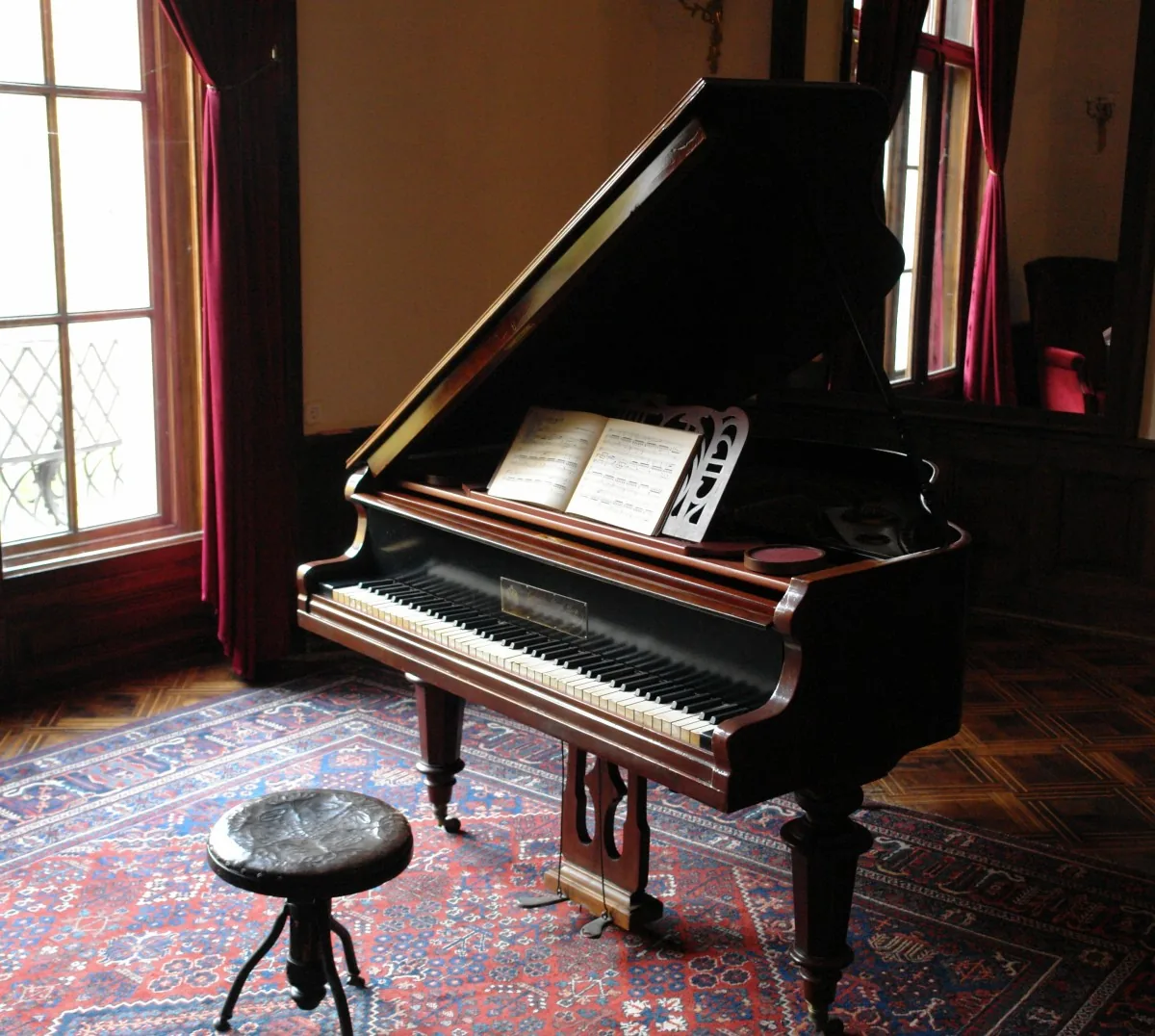
Selection of budget digital pianos for beginners
If your budget is tight, a few models stand out for their value for money and their ability to support learning.
Among them, the Thomann DP-26 (2015) offers 20 sounds, 64-note polyphony and 2 × 10 W speakers. It is a solid option for a beginner facing budget constraints.
The Yamaha P-145 (2023) succeeds the P-45 and offers a progressive feel thanks to its GHC action. The Roland FP-10 stands out for its PHA-4 hammer action, which is highly regarded for its key feel.
The Casio PX-S1100 is one of the slimmest models: it is 23.2 cm deep and weighs 11.2 kg, making it ideal when design and weight matter. These instruments offer 88 weighted keys, sufficient polyphony and built-in speakers.
In summary: these pianos provide essential features, minimalist design and good value for money when starting out. For a more comprehensive selection and buying advice, see our selection of the five best affordable models.
The right balance for everyday use in an apartment
The challenge in an apartment is to combine a shallow depth with dependable everyday sound performance. Priced at €599, the Kawai ES-120 illustrates this balance well.
Its realistic key feel and polyphony let you tackle complex pieces without notes cutting out. Its low weight and limited depth reduce its floor footprint.
Using quality headphones lets you practice at any time. A good keyboard provides a dynamic response that supports learning and progress.
| Criterion | Kawai ES-120 | Practical benefit |
|---|---|---|
| Price | €599 | Good value for money |
| Key feel/keyboard | Highly realistic | Rich expression for everyday playing |
| Polyphony | Extensive | No notes cutting out in complex pieces |
| Footprint | Shallow depth | Suitable for small spaces |
In practice, these instruments often provide a better balance between features and design. They suit musicians who want to play regularly without sacrificing quality.
Premium digital pianos for demanding pianists
Premium instruments aim to deliver uncompromising sound and feel. They are intended for musicians seeking realism close to that of an acoustic piano and professional longevity.
Modeling technology
Modeling reproduces the complex resonances of a grand piano. It provides striking realism and a highly nuanced palette of sounds.
Hybrid key action
Hybrid key action combines wood and resin for a precise mechanism. The result is an expressive response, ideal for working on articulation and dynamics.
Professional features
Specific examples:
- Roland FP-60X: 351 tones and 288-note polyphony.
- Yamaha P-S500: a four-speaker system (2 × 20 W + 2 × 6 W) for sound quality close to that of an acoustic piano.
- Nord Stage 4: a professional instrument priced at €4,359, designed for the stage and studio.
“These models offer options and connectivity that integrate seamlessly into music production.”
To compare other models and refine your choice according to price and design, see our detailed selection: best digital pianos.
The importance of cabinet models compared with portable models
A cabinet turns a mobile instrument into a permanent, polished feature of the home.
Stability and integration. A cabinet provides a solid base and an elegant appearance. It blends with the furniture and reduces visual clutter.

Complete pedal unit. Cabinet versions often have three pedals, including a fixed sustain pedal. This is essential for expressive playing and technique.
Cabinet depth is optimized: it limits the floor space required while improving resonance and the quality of the sounds.
Portable models retain the advantage of mobility and lower weight. However, they do not replace the solidity and practical options of a cabinet, such as a keyboard cover or integrated pedal unit.
Choice: if you plan to keep the instrument permanently in place, a cabinet changes the everyday experience. To refine your selection and compare models, see our Yamaha Arius guide.
Optimizing your indoor headphone playing experience
Playing in an apartment often means prioritizing quiet practice without sacrificing sound quality. Listening through headphones provides an immersive experience and avoids disturbing the neighbors.
Choosing the right headphones for silent practice
Choose closed-back over-ear headphones. They provide effective isolation and reproduce rich sounds, which helps when working on touch and expression.
Fidelity also depends on the keyboard’s internal mechanism and polyphony. Good electronics send a clean signal to the headphones and preserve a realistic playing experience.
- Comfort: large earcups for long sessions without fatigue.
- Connectivity: Bluetooth is useful, but a wired connection guarantees the best quality.
- Apps: educational apps enrich the experience and add practical features.
Practical tip: disable the built-in speakers when using headphones. This lets you play at any time without compromising quality or comfort.
The benefits of modern connectivity for composition
Modern connectivity turns a keyboard into a mobile studio for capturing your ideas.
Bluetooth and MIDI let you send your playing directly to production apps. You can record a demo in seconds and then refine it on a computer or tablet.
High polyphony makes it easier to layer parts and use effects without notes cutting out. The sounds remain rich, even when you stack several tracks.
Learning becomes interactive: online courses synchronize the score with your keyboard. This improves practice and accelerates progress.
A responsive keyboard and seamless connectivity make composition more intuitive. Audio-routing options and notation apps simplify the organization of ideas.
In practice, these features provide an enriched and accessible playing experience. They open up new musical possibilities while remaining suited to home use and a range of budgets.
Conclusion
Choosing an instrument suited to your home starts with defining your priorities: budget, key feel and everyday use.
Choose an 88-key keyboard with a quality action. A reliable digital piano—and well-designed digital pianos generally—offers convincing sounds and excellent playing quality.
Choose between a portable model and a cabinet according to the design and available space. Do not forget good headphones and a sustain pedal to complete your setup, practice and improve the learning experience.
Ultimately, the best piano is the one that matches your criteria, your budget and your ambitions. It promises years of musical enjoyment, with an experience close to that of an acoustic piano while remaining flexible.


0 Comments