The Yamaha YDP-143 was a flagship digital piano of its era. Sold until 2019, it remains a benchmark for musicians seeking a balance between quality and price.
With its 88 weighted keys and GHS system, this model provides an experience close to that of an acoustic piano. Ideal for beginners and accomplished pianists alike, it combines simplicity with performance.
Its replacement by the YDP-145 has not erased its popularity. Equipped with USB MIDI connectivity and 192-note polyphony, it remains a solid choice for learning or practising at home.
Explore its features in greater detail in our complete guide. A lasting investment backed by a three-year manufacturer’s warranty.
Introducing the Yamaha YDP-143
Yamaha’s Arius range includes one particularly notable model: the YDP-143, which combines performance and accessibility. Released in 2016, it succeeded the YDP-142 with significant improvements, including polyphony expanded to 192 notes.
A landmark mid-range digital piano
This model stood out in its day thanks to its Pure CF sound engine, which is more precise than the YDP-103’s AWM engine. Its 88 GHS weighted keys and streamlined design make it a preferred choice for demanding musicians.
Praised for its durability, it competes with the Casio PX-870 and Kawai KDP110 in the under-€1,000 segment. Its value for money remains unmatched, according to many users.
Position in the Arius range
The YDP-143 embodies the DNA of the Arius series: realistic action, classic styling and USB MIDI connectivity. Although replaced by the YDP-145, it retains major strengths, including its 10 high-definition voices.
To explore its technical specifications, consult our complete guide. An enduring benchmark despite the range’s evolution.
Design and ergonomics
Appearance and ease of use are essential criteria when choosing an instrument. This model stands out for its balance between aesthetics and functionality.
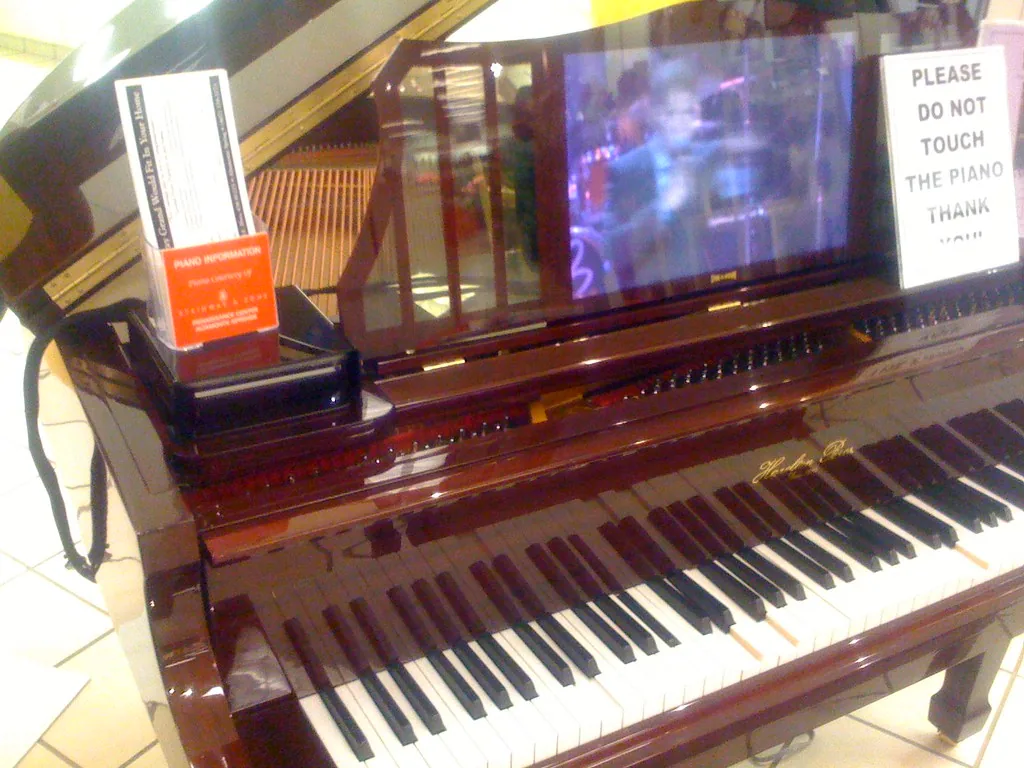
Understated, functional styling
The wood-grain cabinet adds a touch of elegance while ensuring excellent durability. The minimalist control panel, with its seven buttons, avoids any visual clutter.
The synthetic-ivory keys provide a natural, non-slip feel. It is a detail that makes a difference during long playing sessions.
“Its streamlined design fits perfectly into a living room or bedroom without sacrificing performance.”
Assembly and finishes
Installation requires two people because the complete packaged unit weighs 45 kg. Here are the key points to know:
- Sturdy cabinet with a fingerprint-resistant finish
- Sliding cover for easy access to the keyboard
- Significant space saving (30% more than an acoustic piano)
For trouble-free assembly, allow approximately one hour and follow the detailed guide.
Available colour options
Three finishes allow you to match the instrument to your décor:
| Colour | Model | Distinctive feature |
|---|---|---|
| Dark rosewood | YDP-143R | Warm and timeless |
| Black walnut | YDP-143B | Modern and understated |
| Matt white | – | Bright for contemporary spaces |
Your choice will depend on your preferences and the atmosphere of your room. Every option retains the same build quality.
The Graded Hammer Standard keyboard
With its Graded Hammer Standard keyboard, this model stands out for its authentic feel. This technology reproduces the graduated key weight of acoustic pianos, providing a realistic playing experience.
The action of the 88 weighted keys
The GHS system simulates the resistance of acoustic-piano hammers. Keys in the lower register are heavier, while those in the upper register become progressively lighter. This is a crucial detail for developing precise technique.
Compared with Kawai RHIII or Roland PHA-4 actions, GHS offers an ideal balance for beginners. However, some users report slightly more noticeable key noise.
Comparison with an acoustic piano
The YDP-143’s feel rivals that of an entry-level acoustic piano. The weight graduation and velocity curve are carefully calibrated to imitate the sensations of a traditional instrument.
“The transition between this model and an acoustic piano is almost imperceptible for intermediate students.”
Sensitivity settings
Four dynamic-response levels let you adapt the keyboard to your playing style:
- Soft: ideal for delicate nuances (jazz and chamber music)
- Medium: the versatile default setting
- Hard: requires more force, like an older acoustic piano
- Off: constant volume, useful for recording
These options make the YDP-143 a remarkable teaching tool despite the absence of synthetic-ivory keytops.
Pure CF sound technology
The musical experience depends above all on exceptional sound quality. This model incorporates the Pure CF engine, a benchmark in the field of digital pianos.
Sampling of the Yamaha CFIIIS
The sound is captured from a Yamaha CFIIIS concert grand piano, renowned for its harmonic richness. Multilayer sampling faithfully reproduces every dynamic nuance.
Three main variations are available:
- Concert: balanced sound, ideal for the classical repertoire
- Warm: a rounder tone, perfect for ballads
- Bright: a more pronounced attack, suited to jazz
“The depth of the Concert sound rivals that of some entry-level acoustic pianos.”
The 10 available voices
In addition to the three main pianos, seven other instruments expand the creative possibilities:
| Category | Instruments | Typical use |
|---|---|---|
| Keyboards | Electric piano, jazz organ | Contemporary music |
| Percussion | Vibraphone | Jazz, compositions |
| Other | Harpsichord, strings | Baroque music, arrangements |
To explore these voices, consult our detailed guide.
Reverb effects
Four adjustable acoustic environments add depth:
- Concert hall (large and spacious)
- Club (intimate)
- Studio (neutral)
- Cathedral (majestic echo)
The Intelligent Acoustic Control system automatically adjusts the frequency balance. This technology compensates for the limitations of the built-in speakers.
Performance and polyphony
Audio performance defines the musical experience. This model excels thanks to technologies optimised to reproduce every nuance.
Advanced 192-note polyphony
The ability to handle 192 simultaneous notes makes it possible to play more complex works without notes being cut off. Ideal for:
- Romantic pieces (Chopin, Liszt)
- Sustained chords using the pedal
- Multiple layers in compositions
Tests show distortion below 0.1% at maximum volume. That is remarkable stability for this segment.
Built-in acoustic optimisation
The oval speakers (12 × 6 cm) deliver 2 × 6 W. Acoustic Optimizer technology recreates natural spatial imaging.
“The stereo depth rivals that of high-end external speakers.”
Intelligent settings for every environment
The Intelligent Acoustic Control system offers:
- Automatic adaptation to small and large rooms
- Equalisation for nighttime headphone practice
- Presets for different musical styles
Simple speaker maintenance (monthly cleaning) preserves their long-term quality.
Practical features
These intelligent options combine convenience with performance. Designed to facilitate learning and creativity, this model includes tools suited to every ability level.
Dual and Duo modes
Duo mode divides the keyboard into two identical zones. It is perfect for four-hand lessons or teacher-student duets. An ideal function for:
- Comparing techniques in real time
- Working on complex scores
- Accelerating beginners’ progress
Built-in music library
With 50 pre-recorded pieces and 10 demonstrations, practice becomes interactive. Each piece allows:
- The right- or left-hand part to be disabled
- Tempo adjustment
- Live chord analysis
“The included classical pieces helped me master pedalling much more quickly.”
Recording options
The two-track MIDI recorder offers extensive flexibility:
| Function | Use | Compatibility |
|---|---|---|
| Overdubbing | Adding instrumental layers | SMF, USB |
| Multitrack | Recording each hand separately | Applications (Flowkey) |
| Export | Sharing your creations | .MID files |
These piano functions transform the instrument into a portable studio. It is ideal for capturing inspiration at any time.
Connectivity and accessories
Technology integration plays a key role in the modern use of an instrument. This model provides solutions suited to today’s musicians.
USB ports and headphone outputs
Two 6.35 mm headphone outputs enable silent practice without compromise. The USB to Host port simplifies connection to:
- Computers for MIDI recording
- Learning applications
- Composition software
An ideal setup for a home studio, with minimal latency under standard operating conditions.
Compatibility with Yamaha applications
The Digital Piano Controller app (available exclusively on iOS) transforms your tablet into a control console. Its main functions include:
- Quick access to the 10 voices
- Real-time effect adjustment
- Simplified recording
“The intuitive interface considerably speeds up adjustments during creative sessions.”
For Android users, solutions are available through third-party interfaces. Find more information on the official website.
Wireless connection solutions
Despite the lack of native Bluetooth, the Yamaha UD-BT01 adapter provides a reliable solution. Here is a comparison of the options:
| Method | Advantages | Disadvantages |
|---|---|---|
| Direct USB | Optimal stability | Visible cables |
| Bluetooth adapter | Mobility | Additional cost |
| Audio interface | Professional quality | Complex installation |
Your choice will depend on your setup and your technology priorities.
Conclusion: our verdict on the Yamaha YDP-143
This model continues to make an impression through its balance of quality and accessibility. Even after five years, it remains a benchmark for serious beginners and conservatoires.
Its main strengths? Exceptional sound, outstanding durability and thoughtfully designed ergonomics. The playing experience approaches that of an acoustic piano, providing a more realistic experience than many competing models.
Some limitations become apparent over time: restricted connectivity and a less modern interface. If buying one today, favour verified used examples or consider the YDP-145 for updated features.
Despite changes in the market, this model retains an excellent price-to-performance ratio. Read our detailed analysis in this complete review.



0 Comments